

The Children of Blood and Bone trailer arrived this week. A Yoruba world, drawn from West African mythology, built from a Nigerian author's imagination, and produced by Paramount Pictures for a January 2027 release. The film has a cast that includes Ayra Starr, Thuso Mbedu, Damson Idris, Viola Davis, Cynthia Erivo, Idris Elba, Chiwetel Ejiofor, and Richard Mofe-Damijo. The soundtrack carries imprints of Tems, Burna Boy, Fireboy DML, BNXN. By most visible measures, it is a serious attempt at doing this right.
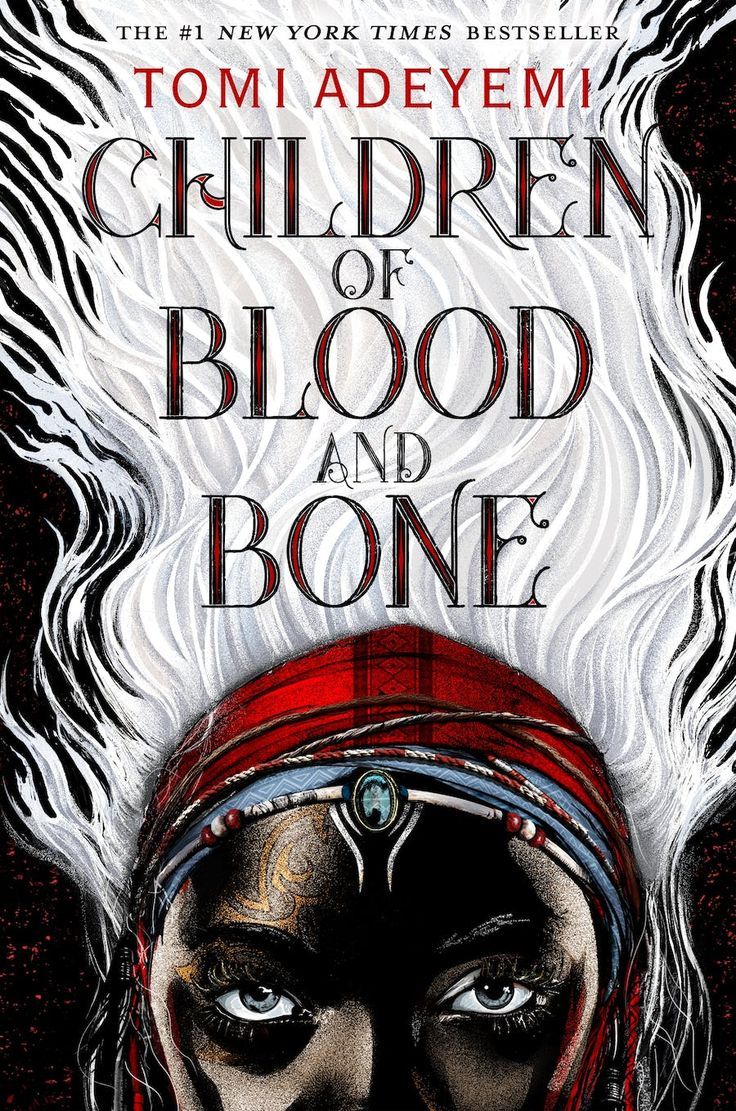
And yet Tomi Adeyemi, the author who created this world, has publicly separated herself from the project, calling the experience “the worst thing she has ever had to live through” without going into specific detail about why. Whatever the reason, the fact that the person who built this world from scratch has chosen to distance herself from its adaptation before it even reaches cinemas is the kind of signal worth paying attention to. Not as evidence of wrongdoing, because we do not know enough for that, but as a symptom of something deeper about how African stories move through Hollywood.
The argument here is not that Hollywood should stop telling African stories. That is the easier version of this conversation and also the weaker one. The money, infrastructure, and global distribution that major studios provide is something African storytelling deserves access to. That is real and worth acknowledging.
The argument is about authorship.
Not ownership. Not exclusivity. Authorship. There is a specific and important difference. Ownership is about who holds the rights. Authorship is about whose creative vision, cultural knowledge, and lived understanding shapes what ends up on screen. And on that question, Hollywood has a long and well-documented pattern of getting it wrong even when it tries to get it right.
Hotel Rwanda was directed by an Irishman and starred an American and a British actress as its Rwandan leads. The film was later challenged by genocide survivors who said it dramatised real events in ways that distorted who Paul Rusesabagina actually was and what actually happened inside that hotel. Blood Diamond filtered the Sierra Leone civil war through the perspective of a white Zimbabwean smuggler, with the Beninese actor Djimon Hounsou attempting a Sierra Leonean accent that local audiences consistently found unconvincing. The Red Sea Diving Resort took an Ethiopian refugee crisis and built a Mossad spy thriller around it, with Ethiopian characters given no speaking lines, no names, no backstory, while Chris Evans anchored the entire film. Tears of the Sun gave Nigeria a fictional military coup and an American military hero, with Nigerian accents so caricatured that the film remains a textbook reference point in conversations about Hollywood and the continent.
Even the films that tried harder stumbled in specific ways. The Woman King delivered an extraordinary physical performance from Viola Davis and genuine West African cast representation, but romanticised the Kingdom of Dahomey without fully confronting the historical reality that Dahomey built its wealth by selling conquered African peoples to European slave traders. Mandela: Long Walk to Freedom was based on Mandela's own autobiography, directed by a British filmmaker, and starred two British actors in its central roles. The lived specificity of South African experience, the weight of apartheid in the body rather than just in the script, is something that research and preparation can approximate but cannot fully replace.
The films that got closest to truth are the ones where authorship sat closest to the source. The Boy Who Harnessed the Wind was written and directed by Chiwetel Ejiofor, filmed in the exact Malawian village where the real events occurred, with actors learning to speak Chichewa. Queen of Katwe was shot entirely in Uganda with mostly Ugandan talent and refused to sanitise the poverty it depicted into something more palatable for Western audiences. Beasts of No Nation was filmed in Ghana with a Ghanaian lead, Abraham Attah, discovered on a football field, who had never acted before. None of these are perfect films. But the closer the authorship got to the source, the closer the film got to something that felt true from the inside rather than constructed from the outside.
The question is not whether Hollywood can tell African stories. It clearly can, and it will continue to. The question is whether the people building those worlds have the cultural knowledge to build them from the inside. Can you construct the visual language of a Yoruba compound without a Yoruba architect in the room? Can you design the spiritual spaces of a West African fantasy world without people who have moved through the real cultural inheritance that world draws from? Can you write the specific weight of grief in a Malawian village without any of that soil in your memory?
You can approximate. You can research. You can hire consultants, travel to locations, and build elaborate reference libraries. What you cannot fully replicate is the knowledge that comes from living inside a culture. And no production budget changes that.
Children of Blood and Bone was written specifically to be a story so Black and so specific that it could not be ignored. Whatever happened between Tomi Adeyemi and the production of its film adaptation, the broader conversation her public statement opens is one African creative industries have been having for years. When a world is built from African cultural inheritance, the people who carry that inheritance most deeply deserve to be at the table where the most important decisions are made. Not just on the soundtrack. Not just in supporting cast roles. At the table.
Hollywood is welcome to tell African stories. But the terms of that telling matter. The difference between a story and a costume is whether the people who know the world from the inside are shaping it or just decorating it.
That distinction is not a creative preference. It is the difference between representation and authenticity. And audiences, African audiences especially, have always been able to tell the difference.